Are you a foreign resident enjoying villa life in the sun in Spain?
If you have a swimming pool, then it’s likely villa life doesn’t always go to plan.
You’ve probably faced the usual issues: tiles falling off, cracks forming and that dreaded water bill creeping up. Maybe you’ve heard about Polyurea as a solution, but you’re not quite sure what it is or how it works.
You might be asking yourself:
- What exactly is Polyurea, and how can it protect my pool?
- Is polyurea better than traditional tiling?
These are important questions and you’re not alone in asking them.
In the article below, we’ll dive into everything you need to know about Polyurea and why it’s a game-changer for pool owners in Spain.
By the end, you’ll see why Polyurea might just be the best investment you can make for your pool.
Let’s get to it.
Tiled pools might look great on the surface…but they are prone to cracking, pressure and leaks!
The problem with tiled pools in Spain
Most swimming pools in Spain are tiled.
If you’ve owned a villa for a while, you’ve probably seen the issues that come with it.
Tiles fall off.
Cracks form.
What do you end up with?
A leak.
It’s not just a small problem; it can lead to significant water bills. Plus, every few years, you might find yourself repairing the pool or retiling the entire thing.
And let’s be honest, retiling can cost you tens of thousands of euros.
It’s a hassle no one wants to go through that every few years.
Wouldn’t it be great to have a pool that you don’t need to worry about? No leaks, no falling tiles, no massive bills.
That’s where Polyurea comes in.
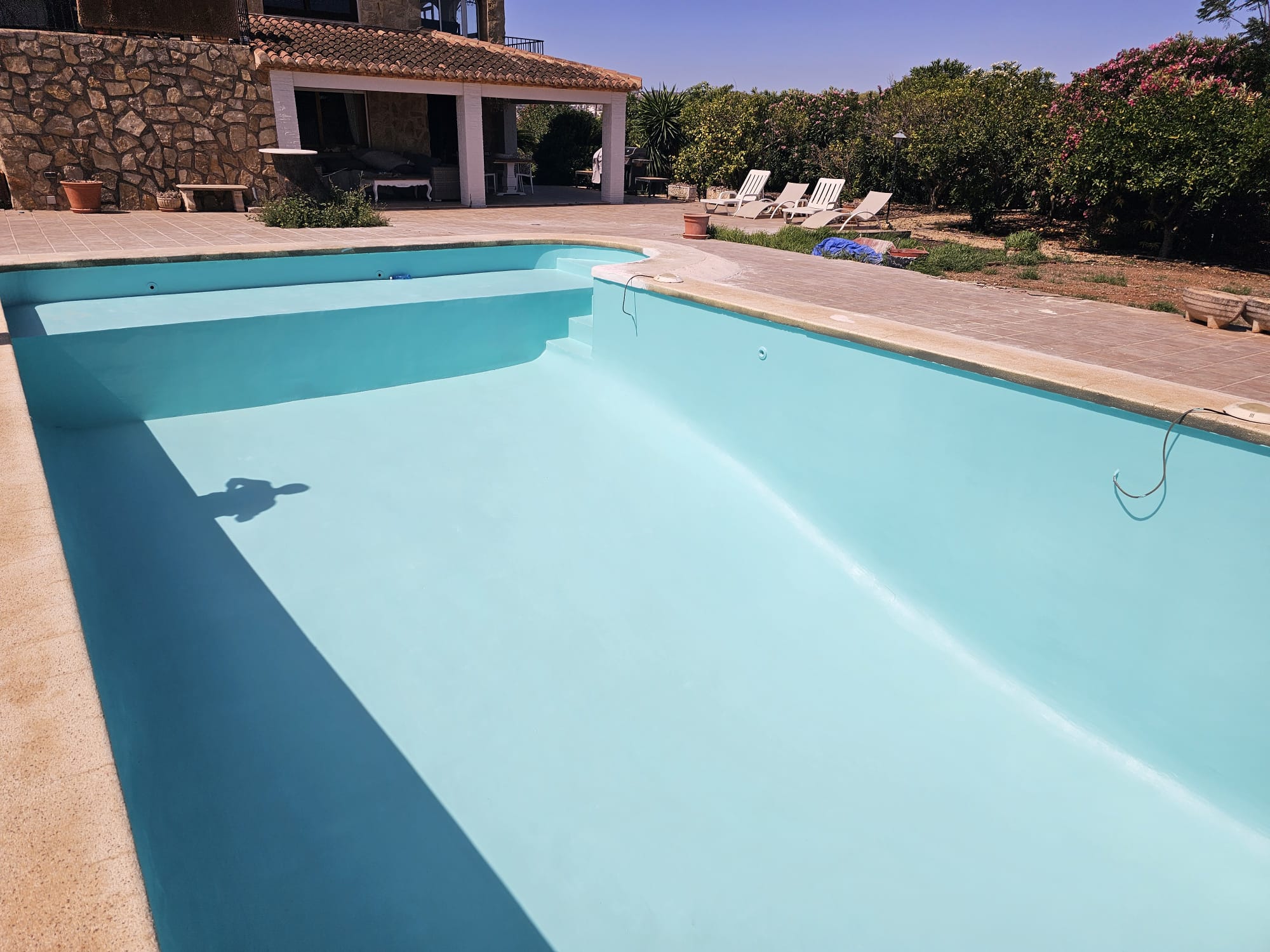
Polyurea is a modern solution to the age-old problem of leaking swimming pools in Spain.
Tiled pools might look great on the surface…but they are prone to cracking, pressure and leaks!
Polyurea: the leak-proofing solution that lasts a lifetime
Polyurea is a type of coating that’s incredibly durable and waterproof.
It was first used in the US for swimming pools and has been a game-changer over there.
But here in Spain?
It’s still a bit of a hidden gem.
Polyurea is sprayed onto your pool’s surface, creating a seamless, watertight membrane.
This membrane is tough.
It’s not like tiles that can crack or come loose. Once it’s on, it stays put. No water gets through.
Not a drop.
That’s why we at Polyurea Pools are confident enough to offer a 20-year lifetime guarantee against leaks.
Why is Polyurea Better Than Tiles?
- Seamless Application: No joints or seams, so there’s nowhere for water to seep through.
- Durability: Resistant to chemicals, UV rays, and wear and tear. It won’t crack like tiles.
- Low Maintenance: Forget about replacing broken tiles or constant repairs.
- Cost-Effective: Over the long run, you save thousands. No more retiling or repairing leaks.
Imagine not having to worry about leaks for the next 20 years.
That’s what Polyurea offers!
Tiled pools might look great on the surface…but they are prone to cracking, pressure and leaks!
What actually is polyurea?
Polyurea is a high-performance elastomeric coating that is known for its durability, flexibility and waterproofing capabilities.
Chemically, Polyurea is formed through the reaction of an isocyanate component with a resin blend component.
This reaction happens quickly, leading to a rapid curing process.
In plain English…polyurea it’s a type of polymer that, when applied as a coating, forms an extremely tough, seamless and resilient layer.
Unlike traditional materials, Polyurea can stretch and bend without cracking, making it perfect for surfaces that need to handle a lot of stress or movement.
Industrial applications of polyurea
Polyurea is used in a wide range of industrial applications, including:
- Waterproofing and Sealing: Polyurea is commonly used to waterproof and seal roofs, basements, and tunnels. Its ability to create a seamless, watertight barrier makes it ideal for protecting structures from water damage.
- Protective Coatings for Infrastructure: Bridges, highways, and parking decks often use Polyurea coatings to protect against the wear and tear from heavy traffic and harsh weather. It’s resistant to chemicals, abrasion, and impact, making it a go-to for infrastructure projects.
- Containment Linings: In industries where spills and leaks are a major concern, such as in oil and gas or waste management, Polyurea is used to line tanks, pipes, and containment areas. It ensures that no harmful substances escape into the environment.
- Marine and Shipbuilding: Due to its excellent resistance to saltwater and corrosion, Polyurea is used in shipbuilding and marine applications. It can be applied to hulls, decks, and other components to protect against the harsh marine environment.
- Blast and Impact Resistance: In military and security applications, Polyurea is used as a protective coating for structures and vehicles. Its ability to absorb and dissipate energy makes it effective in providing blast and impact resistance.
Why polyurea is ideal for swimming pools
If polyurea can handle the stress of heavy machinery, chemical exposure and harsh weather conditions…
It’s more than capable of keeping your pool in top condition for decades.
Traditional tile-and-grout setups are prone to cracks and leaks, but Polyurea’s seamless application leaves no room for such issues.
The main benefits are:
- Polyurea is flexible so it adapts to any movement or settling of the pool structure, preventing the formation of cracks that could lead to leaks.
- Polyurea is resistance to UV rays and chemicals so it won’t degrade or discolour over time, even with constant exposure to pool water and sunlight.
- Polyurea is non-toxic once cured, making it safe for swimmers. It’s certified for contact with drinking water as well.
By choosing Polyurea for your pool, you’re opting for a high-tech, industrial-grade solution that’s proven to last.
It’s not just about fixing leaks; it’s about ensuring that your pool remains in perfect condition, year after year, without the need for constant maintenance or expensive repairs.
Over the long run, polyurea will save you far more than re-tiling your pool.
Re-tiling a pool can takes weeks…but once a pool is prepared, the polyurea can be applied in less than a day!
The 5-step polyurea installation process
You might be wondering how Polyurea is actually applied on your swimming pool.
It’s a straightforward process, but it needs to be done right.
Here’s our 5-step system:
- Strip the Tiles: We start by removing all the existing tiles from your pool. This ensures a clean base to work on.
- Replaster with Waterproof Plaster: Next, we replaster the pool with a waterproof layer. This adds an extra layer of protection before the Polyurea goes on.
- Apply the Polyurea Coat: This is where the magic happens. We spray on the Polyurea, creating that seamless, waterproof membrane.
- Apply Base Colour Coat: Once the Polyurea is on, we apply a base colour coat. This gives your pool the look you want.
- Apply the Finish: Finally, we add the finish. You can choose from a range of colours, and we even offer stone coat effects like a granite finish.
The result?
A beautiful, leak-proof pool that’s built to last.
And remember, our Polyurea pools come with that 20-year leak-proof guarantee.
So, you’re covered for the long term.
Get a quote today
Convinced that Polyurea is the way to go?
It’s time to take action.
Click below to contact us for a personalised quote.
The cost depends on factors like the tiles that need removing, the shape of your pool and the type of Polyurea finish you want.
But here’s the bottom line: You’ll save thousands and maybe even tens of thousands if you have a larger pool.
Why not save yourself the stress, time, and money?
Let us at Polyurea Pools give you peace of mind with our leak-proof solution.
Get your personalised quote online today.